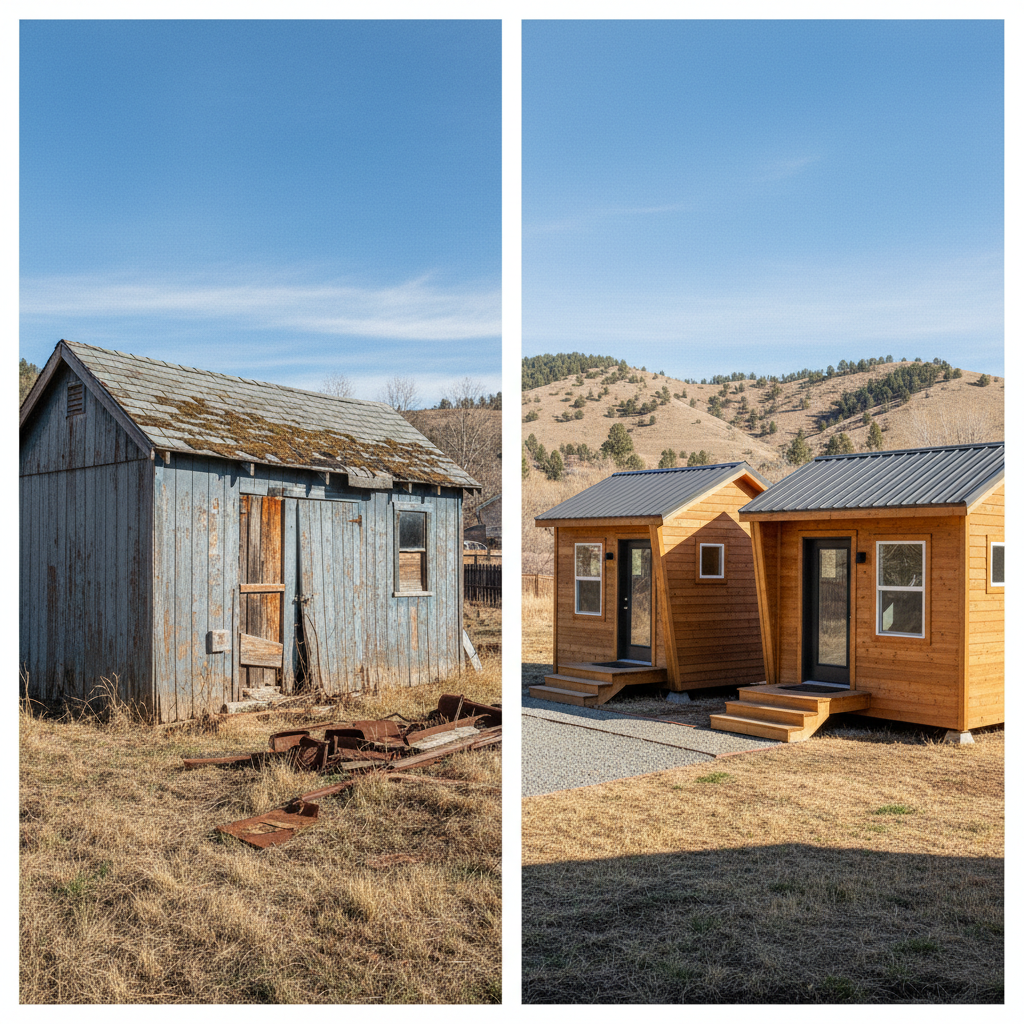
Alright, so you're eyeing a tiny home. Maybe it's for a mother-in-law suite, a backyard office, or just a space to get away from the main house. Good idea, they're super popular around here. But when folks talk about 'tiny homes,' they're not always talking about the same thing. Usually, it boils down to two main approaches: a purpose-built tiny house or a beefed-up, converted shed. Let's dig into what each means for you here in Loveland.
Purpose-Built Tiny Home: The Real Deal
When I say 'purpose-built tiny home,' I'm talking about a structure designed from the ground up to be a living space, just smaller. Think of it like a regular house, but condensed. These are often built on a permanent foundation, or sometimes on a trailer chassis if it's meant to be mobile (though that's a whole different can of worms with zoning). They've got proper framing, insulation, plumbing, electrical, and usually a full kitchen and bathroom. They're built to residential codes, or at least very close to them, even if they're not always classified as such.
Pros:
- Durability & Longevity: These are built like a house. They're designed to stand up to our crazy Colorado weather — the heavy snows, the intense summer sun, and those sudden hail storms we get. You're looking at decades of solid use.
- Comfort & Efficiency: Better insulation, proper windows, and HVAC systems mean they're more comfortable year-round. They'll hold heat better in winter and stay cooler in summer, which saves you money on utility bills.
- Resale Value: A well-built, code-compliant tiny home can add real value to your property, especially if it's permitted as an Accessory Dwelling Unit (ADU).
- Customization: You can design these exactly how you want them, from floor plan to finishes.
Cons:
- Cost: This is the big one. Building a tiny home properly is expensive, often $100,000 or more, depending on size and finishes. You're paying for quality materials, skilled labor, and all those residential systems.
- Permitting: Getting permits for a true tiny home or ADU can be a lengthy and complex process with the city of Loveland. There are specific requirements for setbacks, utility connections, and more.
- Construction Time: It takes time to build one of these, just like a regular house.
Converted Shed: The Budget-Friendly Option
Now, a converted shed is exactly what it sounds like. You start with a robust shed, like one you'd get from Loveland Shed Solutions, and then you finish out the interior to make it livable. This usually means adding insulation, drywall or paneling, electrical wiring, and maybe some basic plumbing for a sink or toilet. They're typically built on a gravel pad or pier foundation, not a full concrete slab like a house.
Pros:
- Cost-Effective: This is where sheds really shine. You can get a good quality shed shell for a fraction of the cost of a tiny home. Finishing it out yourself or with a contractor will still be significantly cheaper overall.
- Faster Turnaround: The shed shell can be delivered and set up quickly. The interior finishing goes faster than a full build.
- Simpler Permitting (Sometimes): Depending on how you use it and what utilities you connect, the permitting process can be less complex than a full ADU. If it's just a detached office or studio without plumbing, it might even fall under simpler accessory structure rules.
- Flexibility: If your needs change, it's easier to convert a finished shed back to a storage shed or workshop than it is to deconstruct a tiny home.
Cons:
- Durability & Longevity: While our sheds are built tough, they're still not designed to the same residential standards as a tiny home. The framing might be lighter, the windows aren't always residential grade, and the insulation isn't typically as robust. They might not hold up as well over many decades of continuous living.
- Comfort & Efficiency: You'll likely spend more on heating and cooling because the insulation and windows aren't as efficient. In the dead of winter, especially when the wind whips off the mountains, you'll feel the difference.
- Resale Value: While it adds usable space, a converted shed generally won't add as much property value as a purpose-built tiny home or ADU. It's often seen more as a glorified shed than a true living space by appraisers.
- Limited Customization: You're working with a pre-determined shell size and shape, which limits your design options.
My Recommendation for Loveland Homeowners
Look, if you're serious about creating a long-term, comfortable, and truly independent living space that will add significant value to your property, and you're prepared for the investment and permitting process, then a purpose-built tiny home is the way to go. Especially with our climate, you'll appreciate the residential-grade construction and efficiency.
However, if you're looking for a more budget-friendly solution for a backyard office, an art studio, an occasional guest room, or just a quiet retreat, and you're okay with a bit less in terms of long-term residential durability and energy efficiency, then a well-built, converted shed is a fantastic option. We build some really solid sheds at Loveland Shed Solutions that can be finished out beautifully. Just be realistic about its limitations as a full-time residence.
Ultimately, it comes down to your budget, your long-term goals, and how you plan to use the space. Think it through, talk to a few contractors, and check with the city's planning department. You'll figure out what's best for your situation.