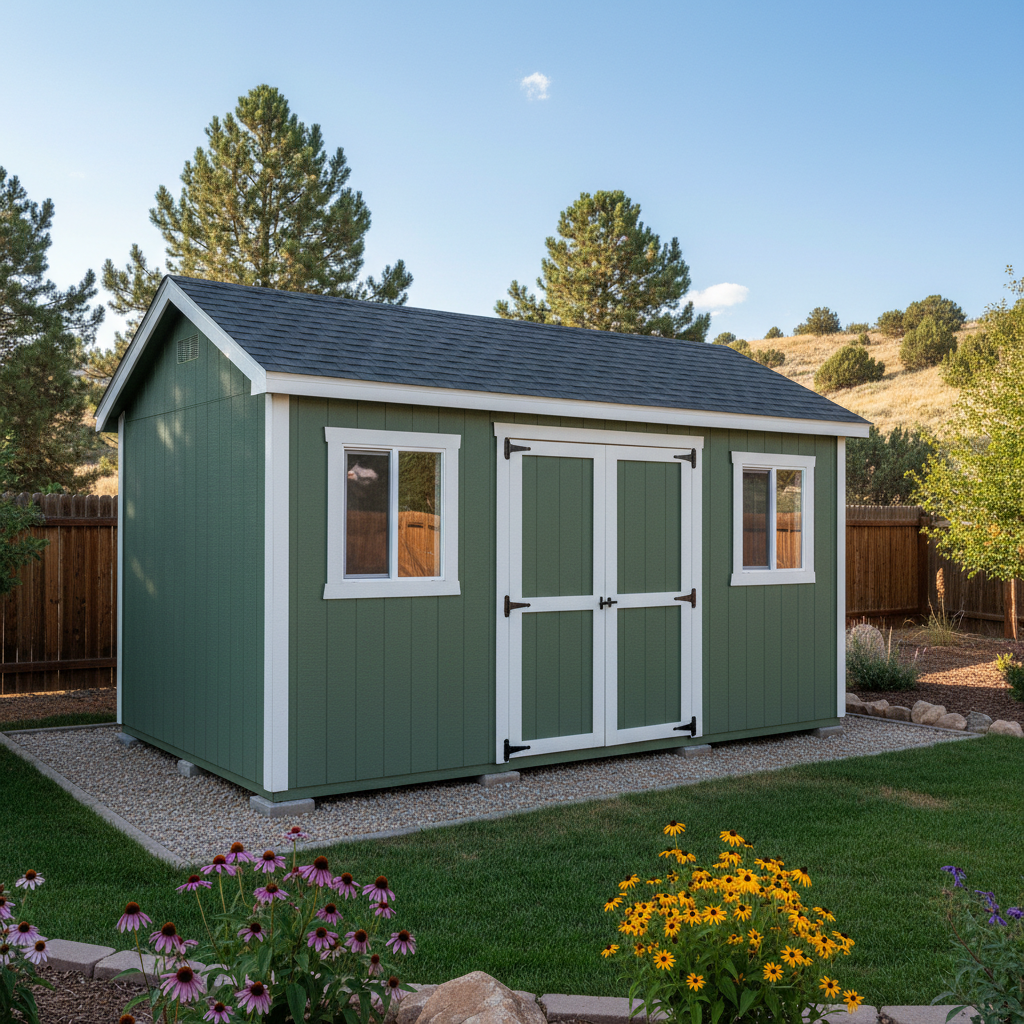
So, you've picked out a shed, maybe even had it built. Great! But now comes the part that sometimes surprises folks: getting it from the builder's lot to your backyard, and then making sure it's set up right. This isn't just about the shed itself; it's about the whole package, and those delivery and installation costs can vary a lot.
I've been doing this for a while here in Loveland, and I've seen everything from perfectly flat, easy-access lots to those tricky, sloped properties up near Devil's Backbone. It all plays into the final price. Let's break down what you should expect.
What Makes Shed Delivery & Installation Cost More (or Less)?
There are a few big factors that really move the needle on cost. If you understand these, you'll have a much better idea of what your quote means.
- Shed Size and Weight: This is pretty obvious, right? A small 8x10 garden shed is a lot easier to move and maneuver than a 12x24 two-story workshop. Bigger sheds often need specialized equipment, more manpower, and sometimes even a pilot car if they're oversized for the road. For a standard 8x12 shed, delivery might be $200-$400. For a 12x24 or larger, you could be looking at $500-$1,000 or even more, especially if it's a pre-built unit.
- Site Accessibility: This is huge. Is your backyard wide open with a clear path for a truck and trailer? Or do we have to navigate tight gates, mature trees, fences, or a steep slope? If we can't get the delivery truck and specialized shed mule right up to the pad, then it means more manual labor, specialized equipment like a shed mover or crane, and more time. An easy site might add $0-$100 to the base delivery. A challenging one with tight turns or obstacles could add $200-$700. If we need a crane because we're lifting over a house or a garage, that's a whole different ballgame, easily adding $1,000-$2,500 just for the crane service.
- Foundation Type and Prep: Before your shed even arrives, you need a solid, level foundation. Most folks go with a gravel pad, which is what I usually recommend for our freeze-thaw cycles here in Northern Colorado. A well-built 4-6 inch gravel pad for an 8x12 shed might run you $500-$900, including excavation, gravel, and compaction. For a 12x24, you're probably looking at $1,000-$2,000. Concrete slabs are sturdier but pricier, often $7-$12 per square foot. If your site needs significant grading or tree stump removal, that's extra.
- Distance from the Builder: Most shed companies, including Loveland Shed Solutions, have a certain radius where delivery is free or a flat, low rate. Once you're outside that, you'll pay per mile. For example, if you're way out past Berthoud or up in Estes Park, that mileage fee can add up. Expect to pay $3-$5 per mile outside the free zone.
- Installation Complexity: Most pre-built sheds just need to be leveled and anchored. That's usually included in the delivery or a small separate fee. If you're getting a shed kit that needs to be assembled on-site, that's a much bigger job. On-site assembly for a standard 8x12 kit can range from $800-$1,500, depending on the complexity of the kit.
Typical Cost Ranges for Shed Delivery & Installation in Loveland
Okay, let's get down to some real numbers. These are rough estimates, but they'll give you a good idea.
- Small Shed (8x10 to 8x12): For a pre-built shed, with a gravel pad and relatively easy access, you're probably looking at total delivery and installation costs (including the pad) in the range of $700 to $1,500.
- Medium Shed (10x16 to 12x20): With a gravel pad and average access, expect to pay around $1,200 to $2,500. If you need a crane or have really tough access, it could push towards $3,000+.
- Large Shed (12x24 and up): These can get pricey. For a pre-built unit, including a substantial gravel pad and delivery, you might be in the $2,000 to $4,000+ range. Again, crane access or complex sites will add significantly.
What Should Be Included in Your Quote?
When you get a quote from a reputable company, make sure it's clear what you're paying for. It should itemize:
- Delivery Fee: This covers getting the shed to your property.
- Site Prep/Foundation: This should detail the type of foundation (gravel, concrete), its dimensions, and what's included (excavation, material, compaction).
- Installation/Leveling: This covers setting the shed on the foundation and ensuring it's level and secure.
- Anchoring: Especially important in our windy Colorado climate! Make sure they're anchoring it to meet local codes.
- Any Extra Labor or Equipment Fees: If they anticipate challenges like tight access or needing special tools, this should be upfront.
How to Avoid Overpaying
Nobody wants to get ripped off, right? Here's my advice:
- Get Multiple Quotes: Don't just go with the first guy. Talk to two or three local companies. Make sure they're quoting on the same scope of work.
- Be Honest About Your Site: Don't try to hide that tricky tree or the steep slope in your backyard. An honest assessment upfront means a more accurate quote and no surprises later. Send pictures or videos if you can.
- Ask for a Site Visit: The best way to get an accurate quote is for the installer to actually see your property. I always prefer to do this; it prevents misunderstandings.
- Understand the Foundation: A cheap foundation can lead to big problems down the road. Make sure you understand what kind of foundation they're proposing and why. A good gravel pad, properly compacted, is key for longevity, especially with our expansive clay soils in some parts of Loveland.
- Check References and Insurance: Make sure the company is legitimate, insured, and has good reviews. You don't want someone unqualified messing up your property or your new shed.
Getting a new shed is an investment, and getting it delivered and installed correctly is just as important as the shed itself. Do your homework, ask the right questions, and you'll be enjoying your new storage space in no time.