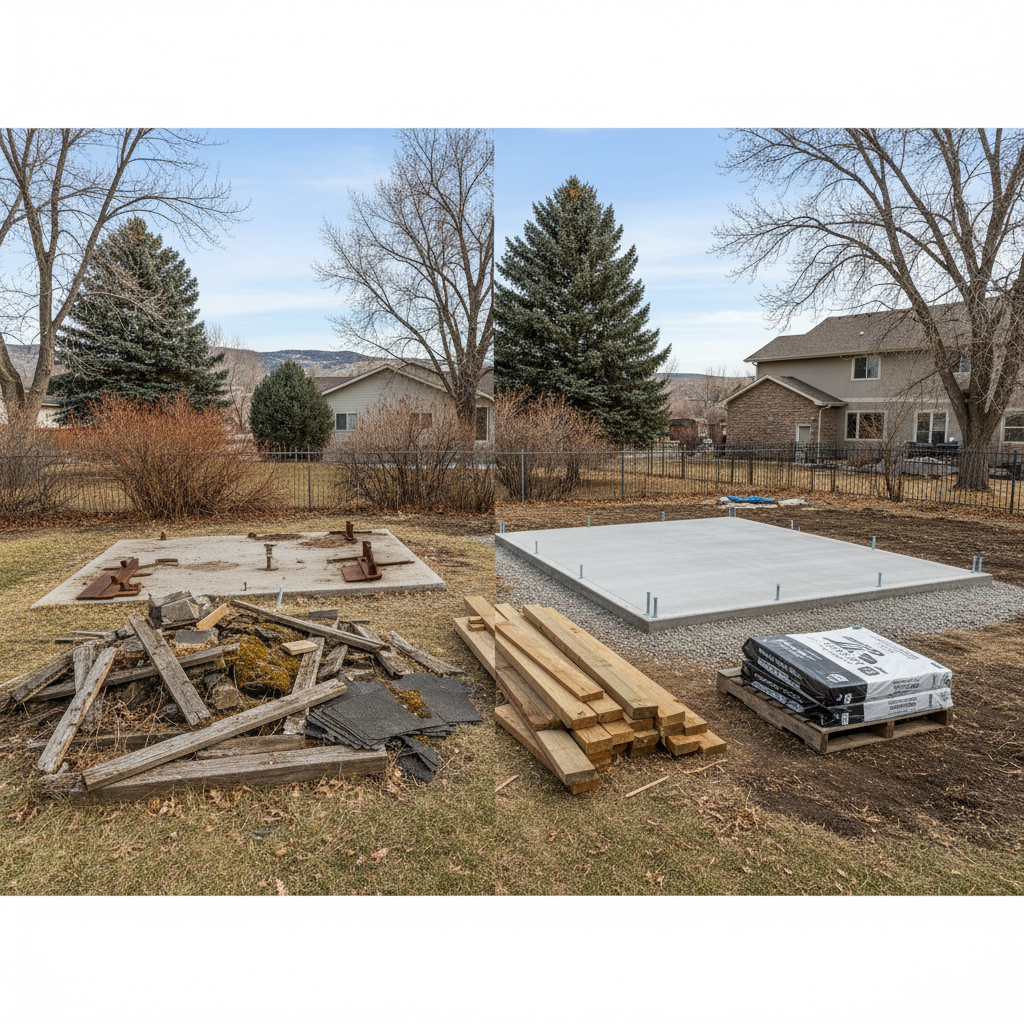
So, you're getting a new shed, that's awesome! But before you even think about what color to paint it, we've got to talk about what it's going to sit on. The foundation isn't the sexiest part of a shed project, I know, but it's probably the most important. Get this wrong, and you're looking at a whole heap of headaches down the road: doors that don't close, walls that lean, even critters making themselves at home underneath.
Here in Loveland, I see folks usually go one of two ways: a concrete slab or a gravel pad. Both have their place, but they're definitely not created equal. Let's dig into what you need to know about each.
Concrete Slab Foundation: The Gold Standard (Usually)
When you picture a solid, permanent structure, you're probably thinking concrete. And for good reason. A concrete slab is exactly what it sounds like: a poured concrete pad that your shed sits directly on. It's tough, it's level, and it's built to last.
Cost
Let's not beat around the bush, concrete is usually the more expensive option upfront. You're paying for materials, labor to form and pour it, and often for excavation. For a typical 10x12 shed, you could be looking at anywhere from $1,500 to $3,000 or more, depending on the thickness, site prep, and who's doing the work. It's a significant investment.
Durability & Longevity
This is where concrete shines. Once it's cured, it's incredibly strong. It won't shift, settle, or wash away. It provides a completely solid, impermeable base that protects your shed's floor from moisture and pests. A properly poured concrete slab will easily outlast your shed, probably by decades.
Maintenance
Practically zero. Once it's in, you don't really have to do anything to it. Maybe sweep it off now and then. It's pretty much set it and forget it.
Appearance
It's a flat, gray surface. Some folks like the clean, industrial look. Others might find it a bit stark. You can always paint or stain it if you want to dress it up a bit, but most people don't bother for a shed.
Gravel Pad Foundation: The Practical Choice
A gravel pad, sometimes called a crushed stone foundation, is a leveled area filled with compacted gravel, usually with a perimeter of treated lumber to hold it all in place. It's a popular choice for smaller to medium-sized sheds and often a good DIY project.
Cost
Generally, a gravel pad is going to be a lot cheaper than concrete. You're paying for gravel, some lumber, and maybe rental of a compactor. For that same 10x12 shed, you might be looking at $500 to $1,500, especially if you do some of the labor yourself. This makes it really attractive for folks on a tighter budget.
Durability & Longevity
A well-built gravel pad is surprisingly durable. The gravel allows for excellent drainage, which is crucial for preventing rot in your shed's floor system. It can last a long time, but it's not as permanent or rigid as concrete. Over many years, especially with our freeze-thaw cycles here in Loveland, it can settle a bit, and you might need to add more gravel or re-level it. Also, if you don't have a good vapor barrier under your shed, moisture can still wick up through the gravel.
Maintenance
You'll want to keep an eye on it. Weeds can sometimes try to poke through, and you might need to rake it level every few years or top it off with fresh gravel. It's not a lot of work, but it's not zero.
Appearance
It looks like a bed of gravel. It can blend into a garden setting a bit more naturally than a big concrete slab. Some people prefer the look, especially if the shed is tucked away.
Which One Should You Choose for Your Loveland Shed?
Alright, so what's my recommendation, speaking as someone who's seen a lot of sheds go up (and sometimes come down) around here?
For most homeowners in Loveland, especially if you're building a shed that's 10x12 or larger, or if you plan on storing heavy equipment, a concrete slab is usually the best bet. It offers unmatched stability, moisture protection, and longevity. Given our expansive clay soils in many parts of Loveland, a properly prepared and reinforced concrete slab will give you the most peace of mind against settling and heaving.
However, if you're putting up a smaller shed (say, 8x10 or less), or if your budget is tight, a gravel pad is a perfectly viable and cost-effective option. Just make sure it's properly dug out, compacted, and framed to prevent shifting. And always, always make sure your shed has a good, pressure-treated floor system if it's going on gravel.
Ultimately, it comes down to your budget, the size and intended use of your shed, and how long you want it to last without fuss. If you're still on the fence, or need help figuring out the best approach for your specific property, give us a call at Loveland Shed Solutions. We've helped plenty of folks get their sheds on solid ground, and we can help you too.